Clown prince comes home to New Paltz this Saturday
By John Burdick - May 29, 2013

Photo by Brian Ferraro
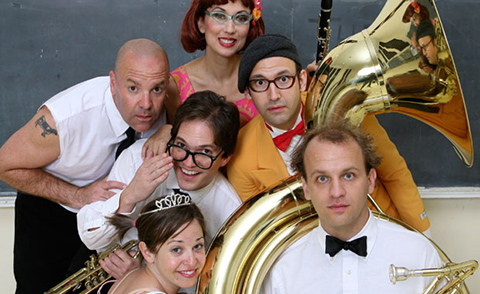
The Maestrosities are: Gina Samardge on accordion; Andy Sapora on tuba; Jenny Lee Mitchell on clarinet; David Gochfeld on ukulele; Rod Kimball on trumpet;
and Glen Heroy (upper left) on spoons.

Speaking as a small-town kid who grew up along the fringe of the big city's cultural perimeter, I can say with finality that my proximity to the Big Apple has conferred upon me absolutely no urban savvy, no street smarts of any kind, no stereotypical New York wit or edge and a conspicuous and almost-perfect vacuum of personal style. Peoria doesn't know this about me, so, shhhh. Let them think that I am "from New York." I am just a small-town kid - granted, one of the weirder kids from one of the weirdest towns, but small.

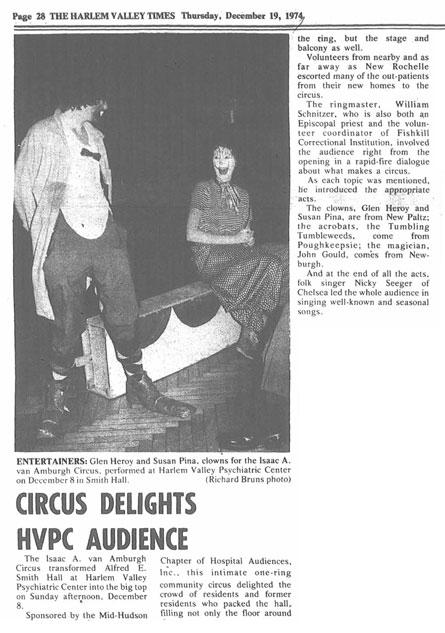
Now, that's not how it went for all my friends. When the Maestrosities - a literal band of clowns, musical clowns, virtuoso clowns - hit the stage at the Unison Arts and Learning Center in New Paltz on Saturday, June 1, it marks a homecoming of sorts for a hometown Heroy. To a certain few generations of Paltzonians, my friend Glen Heroy was our prodigy of the stage, a small-town Chosen One who was stealing 90 Miles Off Broadway productions as a virtual toddler, apprenticing as a juggling clown with the Van Amburgh Circus, rocking Godspell with the college kids as a 14-year-old and eventually finding his métier and his genius as a sketch and character comedian of great physical energy and unjaded imagination. Solo or with a slew of collaborators (typically musicians), he played and packed the village bars alongside all the bands of the'80s - skinny tie and all.

Then Gotham, of course, where the Eastern Seaboard small-town Chosen Ones always go for validation and destiny. Heroy has found heaping piles of both over a nearly-30-year career in the City, but it's validation of the messy and ambiguous adult kind more than the pure, pharmaceutical-grade stuff of small-town childhood dreams. He made serious inroads in New York early with his innovative sketch and musical comedy, dabbled with comic book authorship, did promising TV work with the newly launched Nickelodeon. He paid bills by playing Santa Claus and still does (see him in white beard piloting the Hess helicopter in a heavily aired commercial last holiday season).

Along the way, he has turned a knack for impersonation into a viable second career as a tribute performer (late-career Ozzy Osbourne and Elton John are his specialties). He has honed his singing and spoon playing skills to a, um, knife's edge in the clubs, cabarets and dives of New York, performing with the Maestrosities and with the perilously risqué Bathtub Jen and the Henchmen.

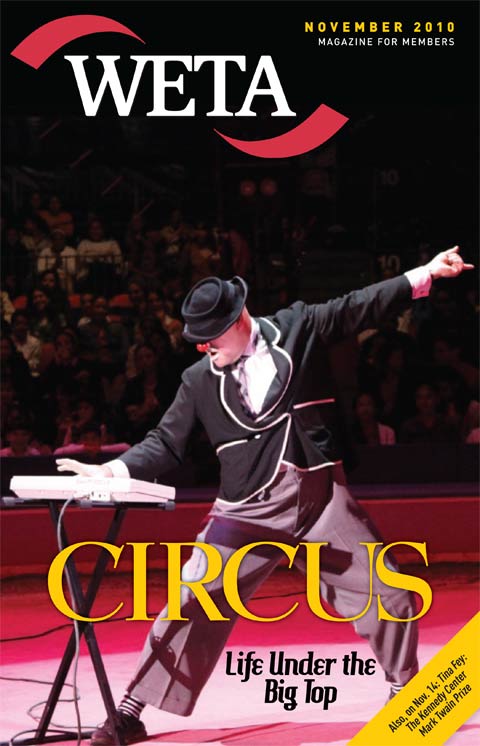
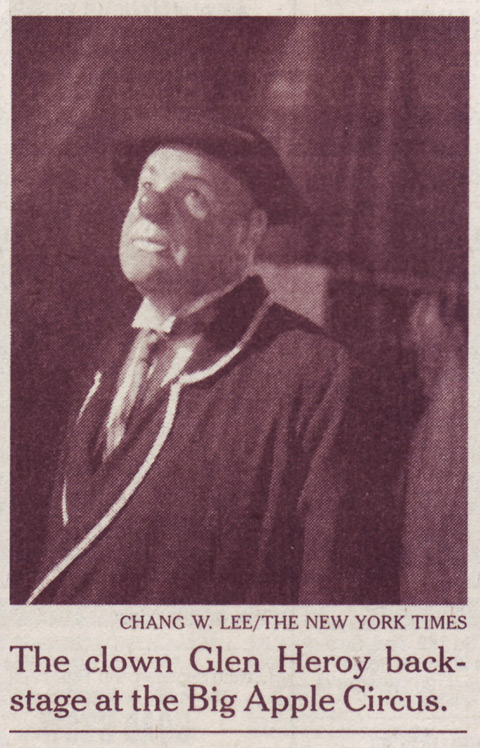
The centerpiece of Heroy's multifarious comedic career might be his work with the Big Apple Circus. He has seen the world through the eyes of a big-tent clown and was featured prominently in the lauded six-episode PBS series Circus. He called me the day he saw his face plastered on the side of a New York City bus, our first contact in a number of years.

But most of his eight years with the circus were spent as part of the Clown Care Unit, a Big Apple Circus program that deployed trained clowns to nine different New York City area hospitals, mostly to pediatric wards, mostly pediatric cancer. As Dr. Bovine, Heroy worked as a supervisor and clown dispatcher, a performer and a coordinator of palliative and therapeutic clown care.

It's a cliché, but the small town does want to see its Chosen Ones succeed. We want that vindication and validation - not of ourselves, of course, but of our discernment and our instincts, our joy reflex, our recognition of a real-deal, can't-miss talent. And Heroy has cultivated that talent with constancy and heart, through highs and lows too many to enumerate. He has always been uncommonly attuned to the secret struggles and traumas of disrupted and non-traditional childhoods. That he should dedicate his industry-certified talents to so selfless and unglorified a calling as the Clown Care Unit ...well, that's the kind of thing that really does a small town proud.

Check out Glen Heroy and the Maestrosities on June 1 at Unison. It's a five-piece band of serious, trained clowns, two of whom have performed with the Flying Karamazov Brothers. Described as "Spike Jones meets the Muppets," the Maestrosities create an immersive world in which they are, in their own minds, the only band that matters. Twice they were rejected by America's Got Talent because they wouldn't break character during the auditions. Now that's talent.

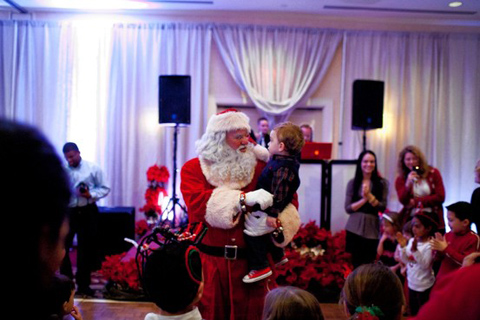
Starring as Santa in 2012 Hess National Commercial


Stars Snuggle Up to Santa Claus
Heidi Klum, Katy Perry, and Mariah Carey are just a few of the celebs who have been caught chillin' with Jolly Old St. Nick this holiday season!

Photo by Johns PKI/Splash News
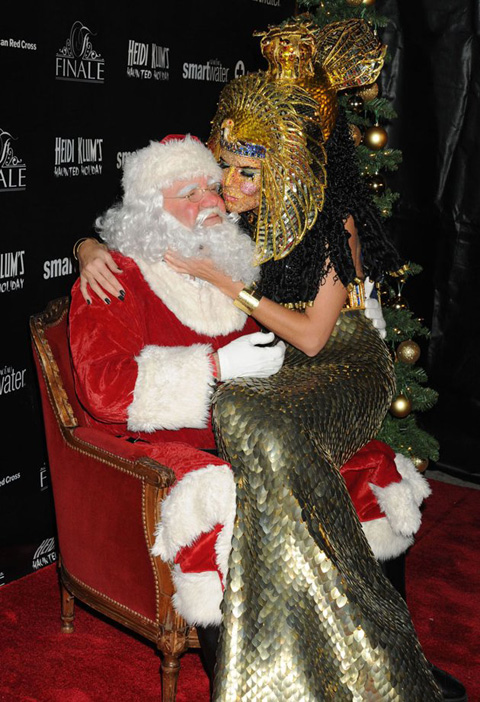
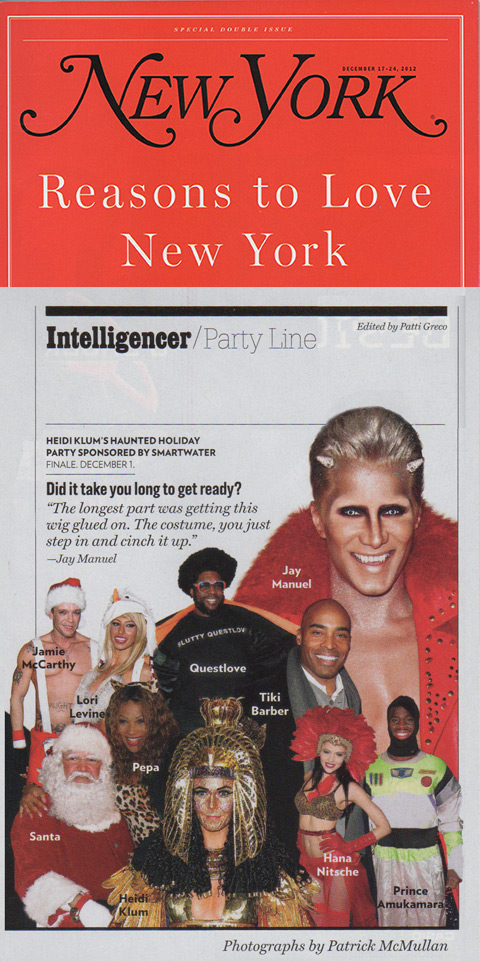
Who needs mistletoe? Heidi Klum, dressed as a fetching Cleopatra, gave the man in the big red suit a smooch at her annual Halloween party at Finale Night Club in New York City in November. (11/12/12)

Photo by Johns PKI/Splash News
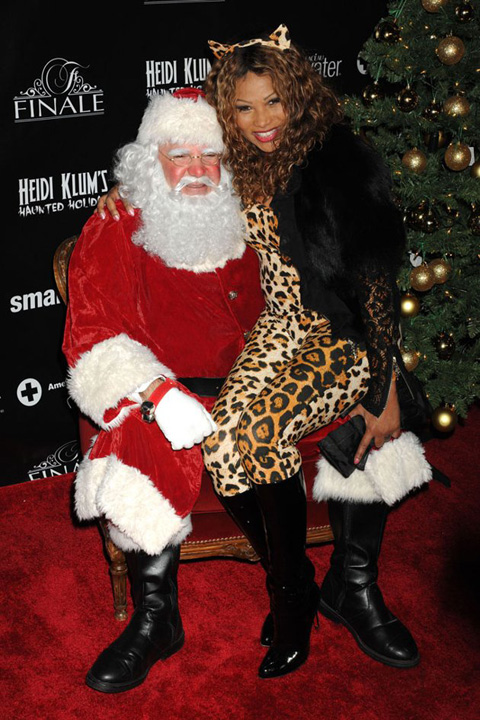
Salt-N-Pepa rapper Sandra "Pepa" Denton brought a little spice to Heidi Klum's soiree and made sure to stop and say hello to Kris Kringle.

Santa's Take on Holidays
By Anne Kadet - Metro Money

Photo by Ramsay de Give for The Wall Street Journal

Performer and professional clown Glen Heroy plays all sorts of characters: Sir Elton John, Truman Capote, Uncle Fester. But during the holidays, Mr. Heroy is a NYC Santa, making appearances at tree lightings, office parties, fund-raisers and restaurants. Parents pay his booking fee (typically $350 to $500) to pose for photos in the living room. He also spent more than a decade playing Santa at department stores including Macy's and Lord & Taylor.

Mr. Heroy, who sees holiday New York at its best and worst, agreed to sit down with Metro Money and speak as Mr. Claus. For in a way, Mr. Heroy is actually Santa Claus, much like I am actually a columnist for The Wall Street Journal. Ho ho ho! We met at one of those overpriced Italian restaurants near Times Square. Mr. Claus, who wore a gray suit and a red dress shirt, ordered pasta after taking a pass on the Caesar salad.
("I have to breathe on children in a few hours, and it would be rude.")

Which New York neighborhood is the naughtiest,
and which is the nicest?

That's a tough question to answer. I don't want to offend people either way. I think some people would like to be from the naughty area.

Could I suggest naughtiest neighborhood is Park Slope,
because it's the most annoying?

Williamsburg is giving them a run for the money. I'll have to check
the data.

What's it like at the department stores?
Kids pull your beard. They're hitting you, punching you. They're just conditioned to think that's OK in the world. I've been peed on, thrown up on, had children fill their diaper sitting on my lap. You would just get off the floor to "feed the reindeer," towel off, apply Lysol and get back as soon as you can.
At certain department stores, they just want you to rack and stack. The fastest I did was four kids a minute, 15 seconds a kid. It's photo, flash and then, "Tell me the number one gift you want. Great to see you!"
So I opted out of department stores.

Photo by Ramsay de Give for The Wall Street Journal

How are the parents?
Fistfights have broken out. It's: "I was here first." Or parents will say, "Tell 'em Santa, tell him he won't get his gifts until he stops wetting his pants!" I ask for a private moment with the child. I say, "You're on the good boy list, don't worry about anything. I know you're trying really hard. Santa loves you."
When parents who have lots of money hire me, they love to have a picture by a roaring fire. It's a million degrees! One little kid looked at me and said, "Santa, are you crying?" I said, "I'm just so happy to
see you."
Once I was hired to be caught under the tree, and mom says, "Santa, there is a gift in the den you seem to have forgotten." It was a live python. She wanted me to reach in and take the damn thing out and carry it to her son. That was the same lady who didn't tell me there would be live reindeer in the backyard.

And the holiday parties?
There's a mixer that I do of some Southern universities, alumni that get together. This year they had the very smart idea of, you take your own picture with Santa in front of the mirror. Brilliant, until the third hour when everyone is completely wasted and spilling drinks all over the place. Wanting to wear your hat. Wanting to use your beard as a mustache. And it gets ugly. Very drunk people offer you money to get a picture of a sexual act with Santa. They think it's hilarious.
I went to a country club this year where the kids are getting top-of-the line American Girl dolls made in China, and they have a lavish spread of food. And in the same costume earlier that day, at the halfway house, there were little children whose entire Christmas is a sheet cake and Domino's pizza and donated gifts. And what's funny is the people at the halfway house will tip me as I leave, and no one does at the country club.

What do the kids want this year?
Kindles, Nooks, iPhones, iPads. That's been basically it. But one 5-year-old girl wanted an autoharp the other day, and a 6-year-old boy wanted a fake mustache. It will blow you away, the stuff that they really want.

What do the kids want this year?
"A Lexus Santa! Where's my Lexus?" People ask for raises, bonuses, job security. You get a lot of job seekers. I say, "Well, my job ends in three days, so I know how you feel."

Has anyone asked for something that really touched you?
People have gotten engaged on my lap. People have asked for relationships. This one little girl said, "Santa, my dad left because he fell in love with his secretary. I have to go live with my grandma now, and we have to get rid of our dog because my grandma's apartment doesn't allow pets." I said to her, "I know how hard it is for you right now, and I know how strong you are. Let's make a pact. I'll think about you all year, like I always do, and you think about Santa all year. And when you show up next year, I know you'll say, 'Santa, you were right. I made it through the year.'"

Did you think about her all year?
Oh God, yeah.

What do you think people should ask for?
Peace, health and happiness. Really.

If you ask for those things, will you get them
Yes, because you're empowering yourself. You could have asked for a trip to Tahiti, but instead you asked for something really meaningful, and that's saying something about you. It's growing inside you.

What does it mean to be good?
A girl sat on my lap yesterday. She said, "I've been a little naughty." I said, "Did you try to be good? That's all that matters."

And what does it mean to be bad?
Disrespect for others. Arrogance, I don't like. Killing puppies is pretty damn bad. You don't want to starve a dog for a laugh.

In New York, do the good people get the most stuff?
The rich people get the most material stuff, but not the most meaningful stuff. So much of the beauty of New York in the holidays is free. It's a beautiful and magical place. We all benefit.


On call with Dr. Bovine:
Clowning around helps young patients
cope with cancer
By Bette Weinstein Kaplan - March/April 2011


When you are a sick child lying in a hospital bed, constantly getting poked and punctured or being wheeled away for procedures that are uncomfortable or downright painful, the last person you would want to see coming toward you is one more white-coated doctor. That is, unless that doctor is Dr. Bovine.

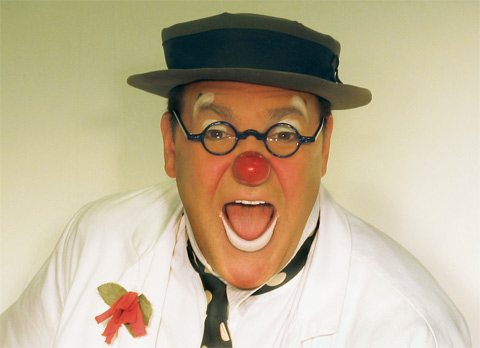
Dr. Bovine describes himself as "a benevolent, almost plodding, always hungry, not so smart, pretty patient goofball with a porkpie hat, a short lab coat, and round glasses." He says the bovine identity was especially appealing to him because "cows give every part of themselves for something." This extremely giving person is actually the clown, Glen Heroy, and his persona as Dr. Bovine for the Big Apple Circus Clown Care program made a huge difference in the lives of many patients at Memorial Sloan-Kettering Cancer Center in New York City. A clown can provide palliative care like no one else.
read whole article


New PBS doc 'Circus' goes behind the Big Apple curtain to reveal world of wonders
By David Hinckley - Nov 3, 2010

PBS' 'Circus' documentary takes an unforgettable trip from the big top to the back lot with diverse characters who make up the legendary Big Apple Circus.

Most of us probably wouldn't want to live in the circus, but this new six-hour documentary from PBS sure makes it an interesting place to visit.

The filmmakers spent a year with the Big Apple Circus, which regularly sets up here for a long run (it's at Lincoln Center now), but also does enough traveling to average 350 shows a year.

Big Apple sells itself as a European-style circus, meaning it has a single ring in which all the action takes place. This sets it apart from, say, the bigger, gaudier three-ring Ringling Bros. and Barnum & Bailey circus.

This three-night doc, "Circus," suggests, however, that the backstage experience might be similar whether there was one ring or 21. That backstage experience, the heart of this production, starts by confirming something most people might write off as mythology: that the circus is a place you run away to join.

For more than a few people here, that's exactly what it is.

Most romantically that includes one worker who says, cryptically, "I came here with some baggage."

We get a deeper look at Glen Heroy, a man probably in his 40s whose baggage includes performing on New York street corners to make enough money to buy dinner that night. For years, he says, he wanted to run away and join the circus. Now he has.

It helped that he was already working as a clown. Still, the difference between being a regular clown and being a circus clown turns out to be like the difference between applying a Band-Aid and performing surgery.

The circus even has a term for rookies: "First of May" clowns.

Henry's story is a good one, elevated by his sheer enthusiasm.

Much of "Circus" doesn't make the traveling life sound very glamorous. The crew lives in trailers with no individual bathrooms. Sanitation can be marginal, privacy and comforts hard to come by.

Yet the performers seem to have a real intensity. Unlike people in other fields, even entertainment, there's little sense that a performance is something you walk through to collect your check.

A number of entertainment enterprises, like sports teams, talk about being a family, and at times, that may be true. A circus crew feels like it's a family whether the members want it to be or not, because of the physical proximity and the interdependence of performers and crew.

When Elizabeth comes in on crutches, and she was going to be the fourth flier in the trapeze act, that reshuffles the whole deck.

When Heidi's circus husband suddenly has to leave, she must decide whether to quit a job she likes so she can follow him.

These aren't the easiest of times for the Big Apple Circus, and paradoxically, that adds more flavor to this production.

Whether the people here are fifth-generation circus or they ran away to join it, their lives make for a good tale.

Want to Run Away With the Circus?
PBS Will Show You How
By Marc Hartzman - Nov 3, 2010

Photo Courtesy of Matthew Akers
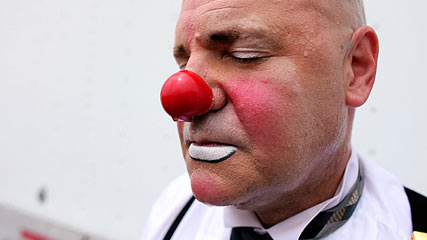
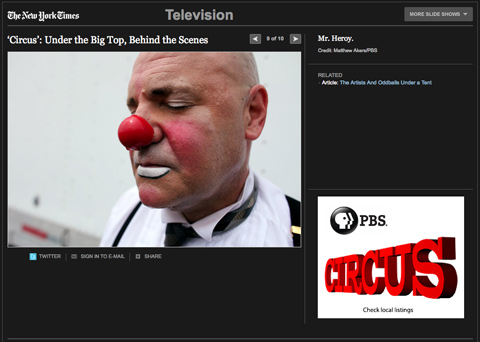
Glen Heroy, a first-year clown with the Big Apple Circus,
is one of the many performers featured in the PBS series "Circus."

And then there's Glen Heroy, known as a "First of May" because he's entering his first season with the Big Apple Circus. Viewers get to watch the former Macy's Santa Claus through his triumphs and failures in the ring. The show captures his journey in great detail, down to his small window of opportunity to finish his laundry between acts in the live show. He does, however, have enough time to stop and discuss it with the cameras.

These and many other stories suggest that circus members were quite comfortable with the omnipresent cameras, speaking candidly and sharing personal moments of their lives.


read whole article


TELEVISION REVIEW
The Artists and Oddballs Under a Tent
By Neil Genzlinger - Nov 2, 2010

Don't think of it as spending six hours at the circus, a brain-numbing prospect for some grown-ups. Think of it as investing six hours in an elegant eavesdrop-on-our-family reality show that puts all the noisy, obnoxious examples of that genre to shame.

"Circus," a six-part study of the Big Apple Circus that begins on Wednesday on PBS, has its share of aerialists, jugglers and clowns, of course, all beautifully filmed. But this quietly addictive program isn?t really about what goes on inside the Big Apple?s single ring. It?s about the people, both under the lights and behind them, who make those performances possible. And, to PBS?s credit, "Circus", filmed over the 2008-9 season, isn?t a mere highlight reel; it takes the time to let you get to know this unusual collection of misfits and perfectionists, making their triumphs and especially their setbacks truly affecting.

For much of the first hour "Circus" doesn?t seem as if it would be worth the commitment. The initial encounters with the principal players include an awful lot of predictable, overblown blather about the wonders of the circus life. It?s every youngster?s dream to join the circus, assorted people repeat in one way or another, a cliché that hasn?t been true for a few generations. We?re all one big family, everyone says, another cliché, though more accurate.
"Six hours of this?" you?re thinking, but just then Maro Chermayeff and Jeff Dupre, the directors, throw in a jolting combination: a nasty accident during training and an incident involving a ring-crew worker that brings the police. It?s suddenly evident that these filmmakers have been given a level of access that will get them well beyond the platitudes.

And sure enough, the subsequent hours bring romance, firings, laughs, injuries, even death. Each episode has something unexpected in it, as well as moments of honesty that make up for the overly romanticized stretches (which are many, with Part 6 getting especially drippy).

It may be news to some viewers that the Big Apple Circus, whose current incarnation in Damrosch Park at Lincoln Center is the 33rd, essentially starts from scratch each year. Though some performers return - Barry Lubin, for instance, seems to have been the clown Grandma forever - others are new, and their various routines must be whipped into shape and blended into a coherent whole. The supporting crew also has to be trained.

The opening episode, "First of May", records the beginning of this process, in Walden, N.Y., where Steve Smith, the director for the 2008-9 season, and Paul Binder, the circus's longtime artistic director, assess what they've got and try to form it into a quality show. There is trouble in the ring - it's a good thing that the horse-riding acrobats wear safety tethers and that the trapeze has a net under it - and some discomfort outside of it, as people get to know one another. Once the circus hits the road, a couple of big-picture stories emerge. One is Mr. Binder's announcement that the season will be his last as artistic director. Another is the economy.

"Here we are on the 29th of September 2008", Mr. Smith is heard to say as the camera pans the tent during a performance, revealing that at least half the seats are empty. "The Dow Jones dropped 777 points today. Money is tight." But the real beauty of this program is in the smaller stories and in the openness with which they're told, from Mr. Binder - his ambivalence about leaving the job couldn?t be clearer - down to the low-wage grunts who set up the tents and clean up after the animals.

"There's a woman, prison, babies and courts, and that explains it all," one tent rigger says by way of describing how someone comes to be doing what he's doing. "Most people who know those four things know you end up in jobs like this."

By season's end, this man has gone through quite a journey, and so have the juggling brothers who barely talk to each other, the clown who takes mood-stabilizing medication, the wire walker who wants to have a baby, and just about everyone else in this well-conceived program. You probably won't be inspired to run off and join the circus after watching "Circus"; heck, you might be left with the suspicion that economics and other forces are going to kill off this art form before too much longer. But you?ll be glad that there were people who did, and that these filmmakers captured them before time marched on.  

Circus
On PBS stations on Wednesday night (check local listings).Produced by Show of Force. Created and directed by Maro Chermayeff and Jeff Dupre; Ms. Chermayeff and Mr. Dupre,executive producers; Matthew Akers,producer; edited by E. Donna Shepherd and Howard Sharp.


Interview with Glen Heroy of PBS CIRCUS
November 1, 2010

Photo Courtesy of PBS CIRCUS
Glen Heroy is one of Big Apple Circus' star clowns
and is featured in the PBS documentary CIRCUS.

With the premier of PBS's six-part documentary CIRCUS airing this week, I was happy to have the opportunity to speak to one of the clowns featured in the show.  Glen Heroy is one of the Big Apple Circus' newest clowns; though, he is certainly not new to clowning.  Glen has been performing since he was four years old.  Whenever he was able to find himself an audience, you could be sure he would be trying to make them laugh.  This attitude hasn't changed even in his adult years!  As he puts it, "I'm almost 50 and I still don't know what I want to be when I grow up!"

Glen has worked a number of performance venues taking him all over the country and even abroad to places like Shanghai, China.  He says he loves the work so much that he doesn't really consider it work.  Glen says he has moments when he finds himself thinking, "I can't believe I'm getting paid to do this!"  Because of this, he's worked as a performer non-stop for over 30 years.  He told me he's now thinking about taking some time off, even though it is tough for him to turn down a new adventure.  I suppose taking time away from the circus is an adventure for a clown.

After learning about his varied performance background, I asked Glen what his most rewarding experience was as a performer.  Glen quickly brought up his time working in the Big Apple Circus' Clown Care Program as the cow-like Dr. Bovine.

With Clown Care, Glen worked in a hospital which catered to children with cancer.  As a result, Glen performed for kids who he knew may not live for much longer.  Glen said he discovered his love as well as his knack for performing for sick children while working as a Santa Clause in a Macy's in New York.  Having special needs children come to him with their wants and dreams inspired him to ask the Big Apple Circus for a spot in their Clown Care unit.  Glen specifically requested to work at the Memorial Sloan-Kettering Cancer Center because he knew it would be a challenge working with chronically ill children.
And it was just that.  Because he was working at the same hospital, Glen was forced to keep his material fresh and new.  Many clowns can get away with reusing their old gags because they work with a different crowd for each performance.  Glen was not afforded this luxury.  And as a result of working with the same audience, Glen became very attached to them.  He said he "became a part of the community of the children's hospital."  And though he occasionally saw kids experience miraculous recoveries, he was also there to witness some tragic losses.  It's no wonder such an experience has stayed with him for so long.

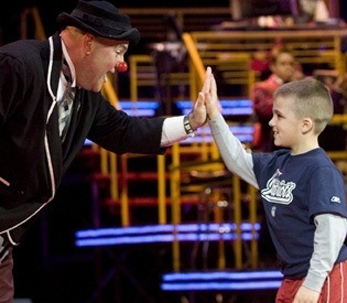
Glen says that working in the cancer center greatly boosted his abilities as a performer.  One of his most memorable moments working with the Big Apple Circus is when he chose a number of kids to come onto the stage as part of an act.  A special needs child saw Glen do this and decided he wanted to be part of the act as well.  The child walked right into the ring with Glen.  Many clowns might have been thrown off-guard by such an event, but Glen managed to go right along with it and work with the kid as if it were part of the act.  Glen says he didn't even flinch because he was so used to this kind of work.

Prior to this experience, Glen was nervous about working in the actual Big Apple ring.  He had never worked in the European-style single ring before and was feeling pretty nervous about it.  He was forced to change a lot of his style in order to perform in the center stage, with the audience literally surrounding him.  However, when the child walked out into the ring and he was able to think on his feet and handle the situation, Glen knew he was doing the right thing working in the circus.  "it's just about having fun and playing," he says.  And though the work does not come easy to most people, Glen could tell by having this experience that he was meant to be a clown.

To see more of Glen and his adventures with the other performers in the Big Apple Circus, tune into the first episode of PBS CIRCUS this Wednesday.  You can find the show on your local PBS station at 9pm EST or follow the show online on PBS Video.  Subsequent episodes will air every Wednesday until November 17th.

One-Ring Show Sings Many Different Tunes
By Lawrence Van Gelder / Theater Review - October 31, 2008


"Grandma, Big Apple's signature clown, is back, ably assisted by
Glen Heroy."


KCTS 9 Interview and "Circus" Preview


Big Apple Circus Charms
By Robin D. Schatz - December 18, 2008

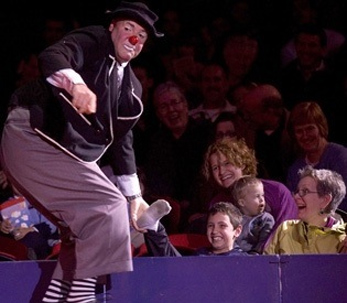
"There's plenty of audience participation - a hallmark of Big Apple shows. Two little girls followed a clown's example as they waved their arms wildly and made the band play. When an unsuspecting man was thrown into the ring to conduct, his frantic gyrations elicited cacophony from the musicians and laughter from the stands."


Feats amaze children of all ages at Big Apple Circus
By Michael Sommers - Monday November 03, 2008

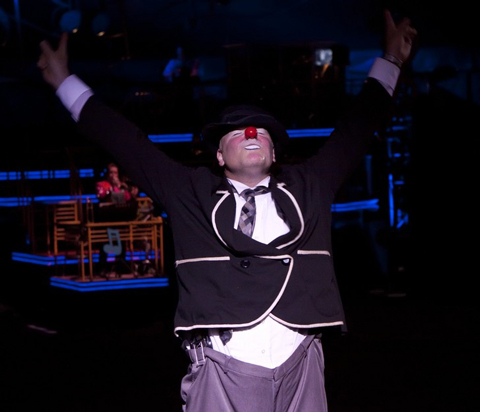
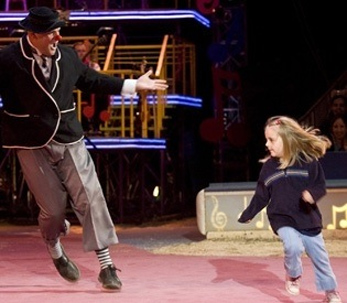
"Amiable baggy-pants clown Glen Heroy conducts the Big Apple's eight-member band with a "magic musical finger" trick that he later teaches to several young spectators - and one adult whose attempt ends in cacophony, of course."


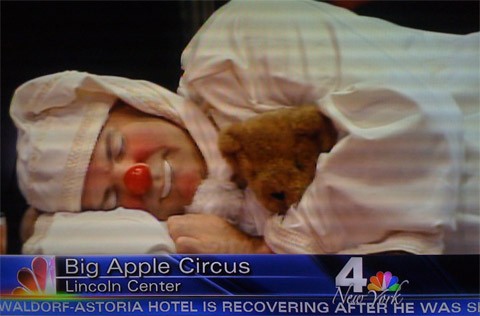
Asleep on NBC's Sunday Today in New York


Big Apple Circus: silly & thrilling
By Laurie Higgins Contributing Writer Cape Cod Times - April 06, 2009


"In addition to fabulous artistry, there are some pretty big laughs, thanks to Glen Heroy (who) invites three people from the audience into the ring to help him 'lead a band' with comical results."


Artists in the Big Apple Circus show 'Play On!'
delight with feats of musical grace and virtuosity
By Jody Feinberg The Patriot Ledger - Posted Apr 09, 2009


"While the clown routines in past shows have at times sagged, humorously Glen Heroy spoofs the art of conducting, intuitively
choosing as conductors cute kids who picked up on their cues."


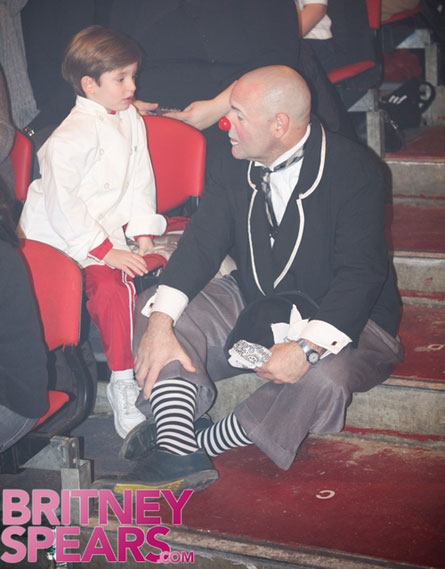
I can now say I have appeared on BrintneySpears.com talking to the
son of Emeril Lagasse.

Big Apple's Clowning Achievement
By Tracy Grant Staff Writer - Wednesday, October 1, 2008

"The best theatrical performances transport the audience. The Big Apple Circus does just that -- taking us back, if only for two hours, to a far simpler time. Part of Big Apple's charm is the way it shamelessly uses audience humiliation -- er, participation -- as part of the show. The best theatrical performances transport the audience. The Big Apple Circus 'mix of clowns' does just that -- taking us back, if only for two hours, to a far simpler time. There's nothing wrong with that."

Photo of the day Tuesday, October 14, 2008


Big Apple Circus gets up close and personal
By Joanna Weiss, Globe Staff - April 7, 2009


"The band joins clown Glen Heroy in a fun audience-participation routine involving conducting, cute kids, and one hapless adult. Oh, and a warning to adults: Don't bury your head in your cell phone during the show, especially if you're sitting in the front row. One woman in the audience Sunday afternoon, texting away, suddenly found herself pulled onstage, where she danced with clowns. Her kids looked thrilled."


Thursday, November 9, 2006


Parade Magazine - Sunday April 13, 2008


The Harlem Valley Times
December 19, 1974